

What is Ontology?
An introduction to a lesser known subject.

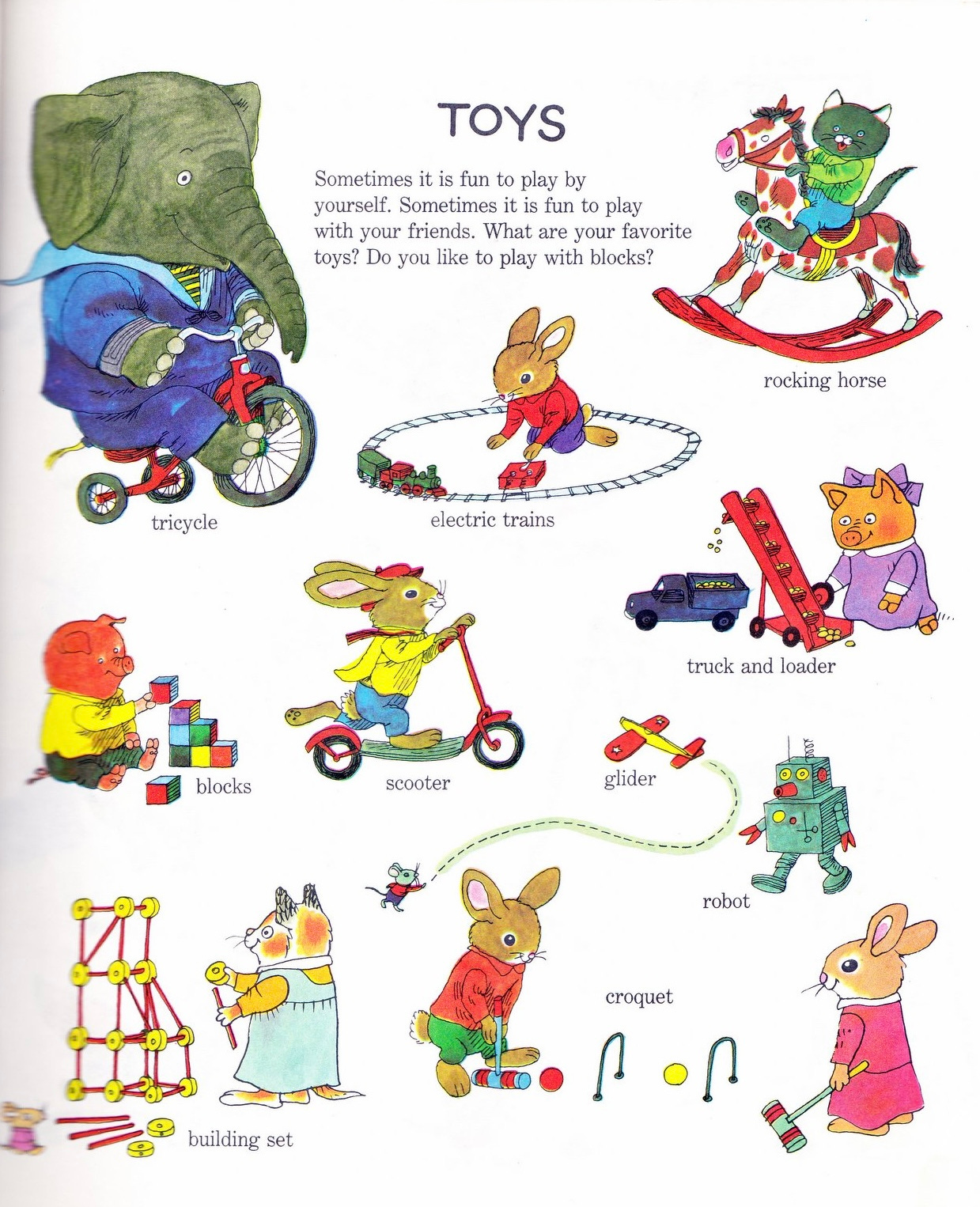
Ontology is not a widely recognized field of study, yet it is something we rely on every day. Ontology concerns what exists, how existence is structured, and how things are recognized as what they are rather than something else. It is not speculation about meaning, belief, or narrative. It is the underlying framework that makes recognition, distinction, and understanding possible at all.
Ontology becomes easiest to see when it is made explicit, as it is in industry. In fields such as software engineering, artificial intelligence, medicine, logistics, and data science, ontologies are not optional abstractions. They are structural maps of reality that systems must obey in order to function. Engineers must specify what kinds of entities exist, what properties they have, and how they relate to one another.
A patient is not a symptom. A diagnosis is not a treatment. A container is not a shipment, and a shipment is not a destination. When these distinctions blur, systems do not merely become inefficient, they fail. Errors cascade, decisions misfire, and outcomes become unpredictable. These domains do not preserve coherence through arbitrary endeavors such as opinion, consensus, or narrative. They depend on the recognition that reality itself is structured, and that intelligibility requires honoring that structure. Ontology helps prevents information from collapsing into nonsense.
What industry formalizes deliberately, the human mind performs instinctively. Human development offers a clear illustration of ontology at work. As toddlers learn to speak, one of their most persistent questions is some version of “What is this?” This is not curiosity about preference or utility. It is an attempt to catalog reality.
The child is not asking what something does or whether it is liked. They are trying to determine what kind of thing it is. In doing so, they build an internal map of existence, an ontological catalog. This is why most early childhood books are ontological in nature, pictures of everyday objects labeled for identification. Language acquisition depends entirely on this process. A child cannot learn words without learning distinctions. They must recognize that an object is not an action, that a person is not a thing, that a sound is not the self, and that the self is not interchangeable with others. This sorting occurs prior to formal reasoning, ethics, or social norms. It is the precondition for all of them.
In both industry and human development, coherence depends on structure. Where structure is absent, inconsistent, or denied, reasoning cannot stabilize. In medicine, a coherent ontology distinguishes a symptom from a disease, a diagnosis from a treatment, and a patient from their data. When these categories collapse, harm follows; not from malice, but from confusion. In software systems, when users, permissions, actions, and outcomes are not clearly distinguished, errors do not merely appear, they multiply.
The same pattern appears in everyday life. A legal system that cannot coherently distinguish between speech and violence, intent and outcome, or responsibility and circumstance does not become compassionate. It becomes arbitrary.
This brings us to the core operation of ontology itself.
Ontological analysis proceeds by elimination. It asks which features of a thing can change without the thing ceasing to be what it is. Anything that can vary while identity remains intact is not ontologically essential. What remains, right before the object becomes indistinguishable from something else, is its core identity.
Color can change. Size can change. Material can change. Function can change. Context can change. If the thing survives these changes without ceasing to be what it is, then those features are not its ontology. Ontology is therefore not the accumulation of properties, but the disciplined subtraction of non-essentials. It marks the precise boundary where identity holds and beyond which it collapses into indeterminacy. Ontology is concerned strictly with what is versus what is not, not with utility, preference, or composition. Those belong downstream.
With this in place, we can now understand the role of objectivity in ontology.
Objectivity refers to a specific kind of structure, the only kind capable of grounding coherence without collapsing into bias. An objective structure is singular rather than competing, universal rather than selective, independent rather than perspective-bound, external to what it evaluates, non-derivative of what it governs, and invariant across circumstance or interpretation.
These six conditions are not philosophical preferences. They describe the only structure capable of grounding judgment without circularity. Bias arises when evaluation depends on position or interest within the system being judged. Objectivity stands outside that influence. It does not negotiate with preference; it constrains it.
Coherence is not mere agreement or internal consistency. It is the condition under which distinctions remain stable across contexts, premises lead to conclusions without distortion, and reasoning moves forward rather than looping back on itself. Crucially, coherence cannot be manufactured downstream unless it is already stable upstream. It cannot be patched together through convention or consensus. When coherence is borrowed locally—used in logic, science, or engineering—but denied at the ontological level, fragmentation follows. Systems appear to function only because coherence is being tacitly assumed, not because it has been grounded.
Objectivity is therefore sovereign over subjectivity. It does not eliminate perspective, but it prevents any perspective from becoming absolute. It establishes a reference point that judgments must answer to rather than invent.
Returning to ontology, objectivity has a deeper meaning than it is often given today. To recognize something ontologically is to recognize it in its core identifiable form, stripped of variable features. Ontological analysis locates the boundary where identity holds and where it fails. Objective structure supplies the conditions that make such identity recognition coherent, while ensuring that identity does not depend on perspective, use, or convention.
Because nothing is responsible for its own existence, coherence cannot originate from within entities themselves. It requires a non-derived reference that grounds recognition without borrowing authority from what it explains. It is the pairing of objective structure with ontological identity analysis that makes foundational coherence possible, allowing distinct entities to be recognized, related, and reasoned about without contradiction.
This shared reference is what allows parts to participate in a whole without being defined by it. A sink, stove, oven, refrigerator, and table can exist as isolated objects, each with its own material composition and local function. Taken merely as a list, they remain unrelated facts. When their identities are reduced ontologically, when each is understood in terms of what it is rather than what it is used for, their relations become intelligible. They are no longer arbitrary items; they are stable identities capable of participating in a unified structure without losing their independence or significance in relation to their peers.
A kitchen is not defined by any particular fixture. It is a space designated for food preparation and handling. Food, not furniture, is the organizing reference. Components may be absent, substituted, or repurposed without collapsing the kitchen as such. A sink remains a sunken basin with a water source and drainage whether it appears in a kitchen, bathroom, or laboratory. A trough can become a sink without altering what a sink is. A table remains a stable horizontal surface regardless of what it supports. Placement changes role, not identity. This invariance is precisely what allows components to participate coherently across domains.
Without objective ontological recognition, the same objects could be misgrouped or rendered meaningless; a stove treated as furniture, a sink as storage, a table as machinery. What prevents this collapse is not habit or utility, but objective structure: the recognition that identities can be unified by a shared reference without being reduced to it. Ontological coherence transforms mere aggregation into intelligible unity.
When coherence is established at the ontological level, the human psyche gains stability. Reason has something to lean on. Meaning does not need to be reinvented in every moment. Coherence is not imposed upon reality; it is recognized as already present, because it precedes material perspective rather than emerging from it.
This recognition is what objectivity truly names: the acknowledgment that reality responds consistently to an objective structure independent of human standpoint. That structure is singular, external, independent, universal, non-derivative, and invariant. The convergence upon such a reference is not cultural projection or historical accident. It is the necessary conclusion of reason when coherence is followed to its source.
This reference is not the God of theology, nor a product of religious tradition or modern intellectual categorization that can lay claim. It is not a narrative device or moral symbol. It precedes all such frameworks. Across history, humans have named this reference “God” not to explain it away, but to indicate what reason cannot bypass without contradiction: the ground that makes intelligibility possible at all. This is not belief imposed on reality, but reality disclosed through coherence. It is the orienting compass of reason itself.
The modern intellectual framework actively fragments this clarity. Today, this foundational recognition—what is real, what counts as objective, and what grounds coherence—is categorized according to when, where, and how humans are permitted to reason. Ontology is separated from lived reality. Objectivity is confined to empirical domains. Abstract sciences, ethics, and rights are treated as negotiable, interpretive, or culturally contingent.
This split is maintained through disciplinary boundaries. Philosophy is separated from theology, while epistemology and ontology are both placed and recognized beneath philosophy. Ontology is widely respected as operational rather than foundational. Objectivity is rigorously enforced in material sciences while restricted or policed in abstract domains.
The result is a controlled asymmetry. Empirical claims are required to be objective. Claims about existence, meaning, value, and rights are not because objective recognition in relation to ontology is largely ignored. This allows systems to benefit from coherence while denying it where it would produce accountability.
Within this framework, monotheism becomes a distorted proxy for objectivity. Singular reference is acknowledged, but the remaining conditions—universality, independence, externality, non-derivation, and invariance—are obscured. The concept is rendered ultimate yet inaccessible, mysterious rather than structural, untouchable rather than analyzable.
This does not clarify reality. It distracts from it.
Coherence is not a human achievement. It is a constant feature of reality. We discover it; we do not create it. To deny this would require showing how complete nonsense can generate sense without reference to any prior structure.
When coherence is denied at the foundational level and borrowed only where convenient, ontology collapses into operational confusion. Reason attempts to function atop ground it refuses to acknowledge, and brute force fills the gaps left by meaning.
Ontology describes what exists.
Objectivity describes the structure that makes recognition possible.
Coherence is what emerges when that structure is honored at the beginning rather than improvised downstream.
Together, they mark the difference between a world governed by reason and one governed by controlled narrative.
That difference is the fine line between sense and nonsense.